AI Engineer Hydrous Group

RicardoAltamirano

I build AI systems that ship to production.

Production agents and the harnesses they run on: context engineering, evals, guardrails, and the deterministic operating cores agents need. Shipped with Spec-Driven Development discipline.

Open to AI Engineer & Forward-Deployed roles Building vertical AI at Hydrous Group

I'm an AI Engineer, and in practice a forward-deployed one. I embed in a domain and stay until the system actually works in production, not just in a demo. Most of my work lives where being wrong has consequences, so I optimize for systems that fail safely and stay debuggable.

Currently at Hydrous Group, building vertical AI platforms that pair governed agents with deterministic operating cores. I work with Spec-Driven Development and agentic coding discipline.

What I believe

  • Don't build the agent. Build the operating system the agent must use.
  • An agent is a model plus a harness. The model is the easy part. I build the harness: context, tools, evals, guardrails.
  • Agents need guardrails, not vibes: least-privilege tools, governed workflows, and humans who approve canonical truth.

How I build reliable AI systems

  • 01 Structured outputs over free text Models return typed, validated objects, not prose I have to parse and hope about.
  • 02 Deterministic logic outside the model Business rules live in code the agent calls, not buried in a prompt.
  • 03 Evals before deploy Changes ship behind eval suites in CI: measured, not vibes.
  • 04 Least-privilege tool execution Agents get the narrowest tool surface that does the job, sandboxed.
  • 05 Humans approve canonical truth People own what becomes ground truth; agents retrieve, draft, and propose.
  • 06 Budgets and observability in the loop Every run has explicit latency and cost budgets, traced end to end, so regressions surface fast.

Systems
I've shipped

Production AI built inside real domain operations, not prototypes.

01

Vertical AI platform for regulated operations

Hydrous Group · In production

Field teams ran regulated workflows out of spreadsheets and email threads. I built a production AI platform where agents operate on top of a deterministic vertical core: humans approve canonical truth; agents handle retrieval, tool execution, and structured drafts inside real business processes. Guardrailed with least-privilege tools, sandboxed execution, and evals in the loop.

MESSY INPUTS PDFs · lab reports images · audio email · chat AI AGENTS pydantic-ai agents structured outputs extract · draft · assess HUMAN REVIEW approves canonical truth DETERMINISTIC CORE PostgreSQL canonical data · workflow state evidence · audit trail OFFER PIPELINE assessments offers · outcomes OUTCOMES FEED THE LEARNING LOOP

Agents draft. Humans approve. The database owns workflow state.
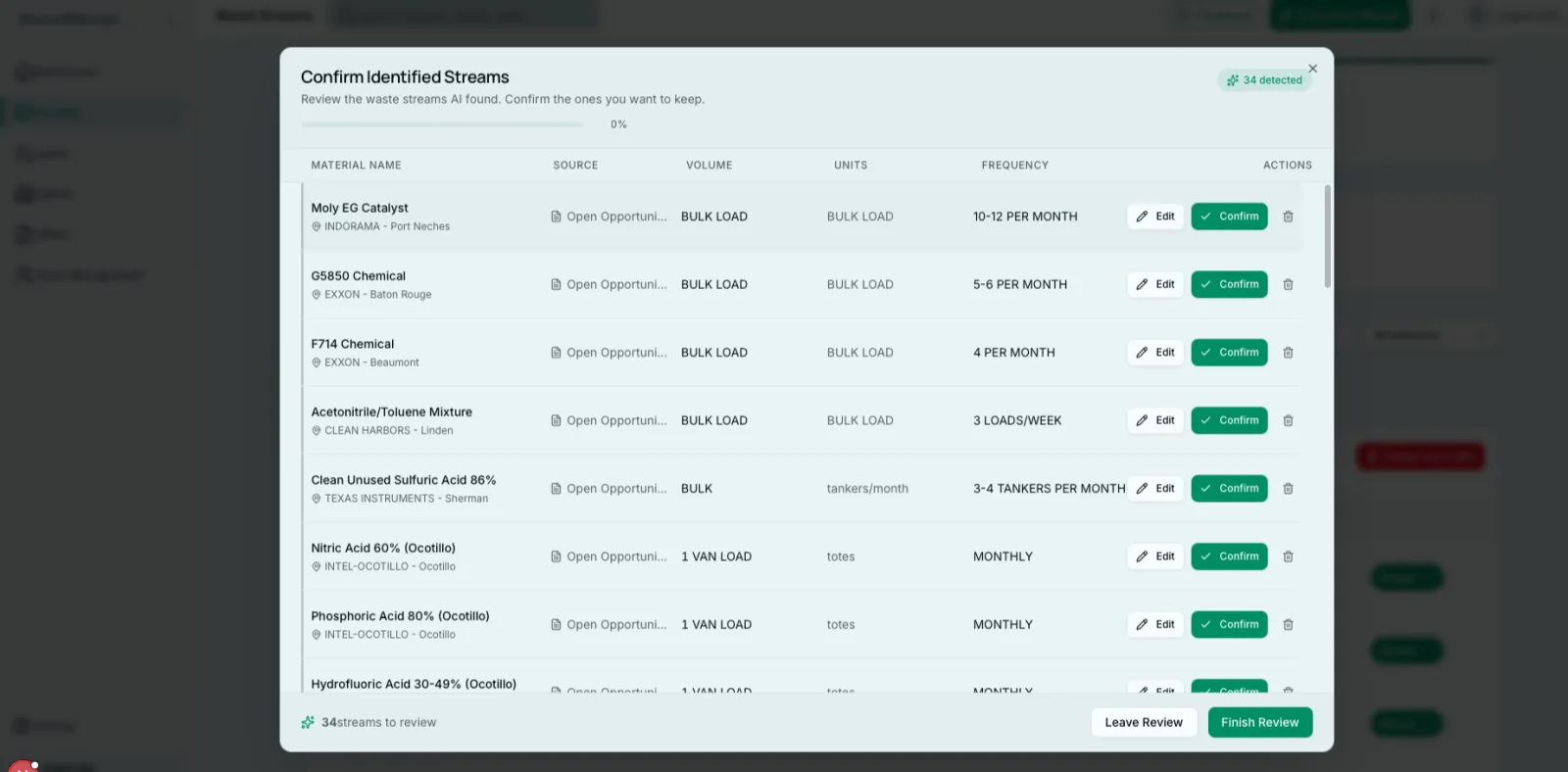
AI discovery results proposing candidate streams extracted from uploaded field documents
AI discovery: agents extract candidate streams from messy field evidence; every draft goes through human review.
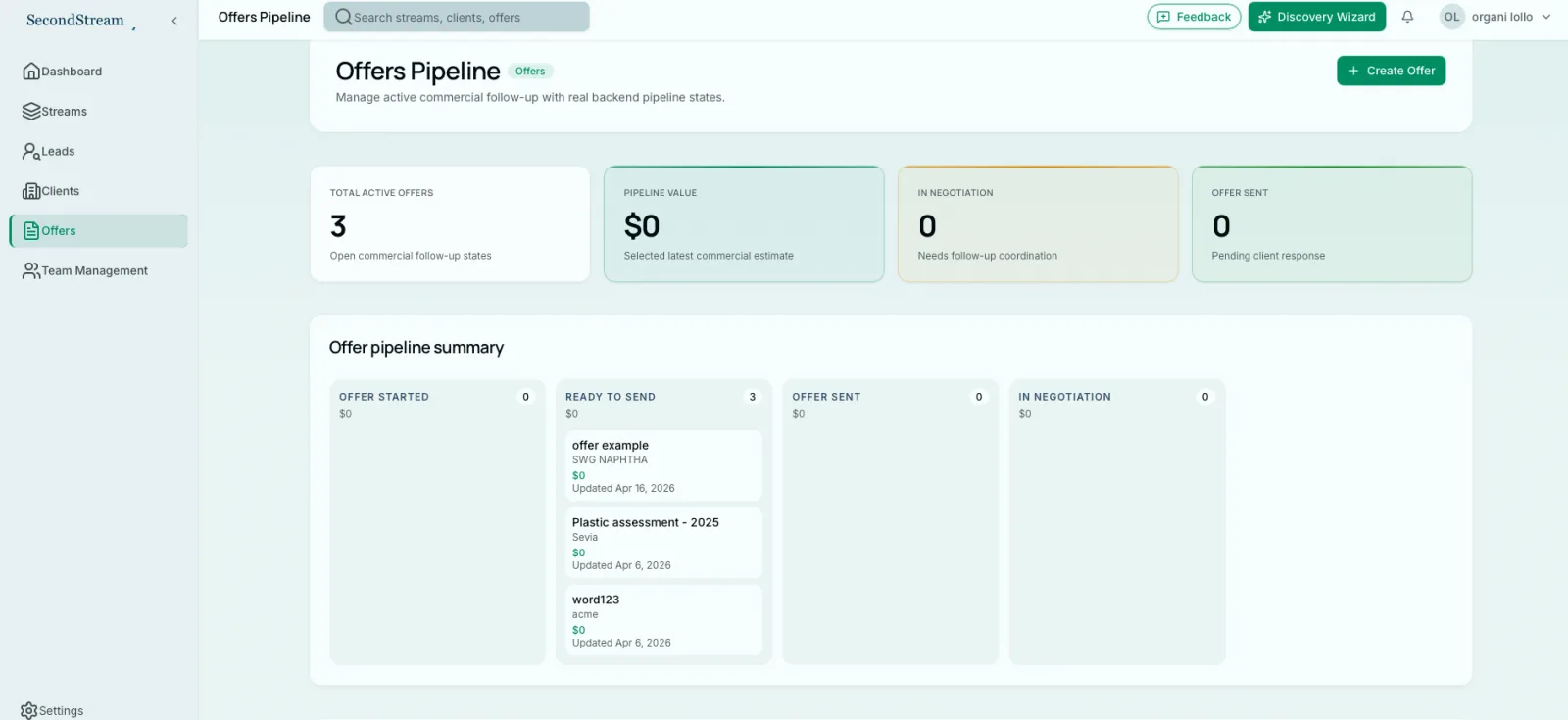
Offer pipeline board tracking qualified streams by commercial status and owner
Qualified streams move through a governed offer pipeline with ownership and a full audit trail.
  • Vertical AI
  • Production Agents
  • Subagent Orchestration
  • Guardrails
  • Evals
  • FastAPI
Open-source core on GitHub
  1. 02

    Company-wide knowledge layer with Claude Skills

    Hydrous Group · Internal platform

    Domain expertise was trapped in people's heads, Slack threads, and docs that went stale. I built an internal knowledge layer that packages each team's expertise as model-invoked Claude Skills. Claude applies the right guidance automatically from task context, so engineers don't have to know what exists or go ask. Distributed through an internal marketplace with per-team governance, backed by subagents for review and validation, lifecycle hooks, MCP servers, and OpenTelemetry usage analytics to keep the skills sharp.

    • Claude Skills
    • Knowledge Layer
    • Subagents
    • MCP
    • Hooks
    • Observability
  2. 03

    Multimodal diagnostics & proposal generation

    Hydrous Group

    Field evidence (documents, images, charts, engineering assets) arrived in inconsistent formats. I built multimodal AI that grounds analysis in domain knowledge, then generates client-ready technical proposals with dynamic tables, charts, and process-flow diagrams.

    • Multimodal
    • Document AI
    • RAG
    • Structured Outputs
  3. 04

    Enterprise knowledge & proposal platform

    DVAWEB

    Proposal turnaround was bottlenecked on tribal knowledge spread across documents, CRM, and prior projects. I built a knowledge platform that integrates retrieval with CRM and proposal workflows in real time, plus a natural-language-to-SQL surface so non-technical teams could query data directly.

    78% faster proposal turnaround

    • RAG
    • NL-to-SQL
    • CRM
    • Real-time
  4. 05

    Intelligent parking platform

    DVAWEB

    End-to-end product build: architecture, backend services, frontend, and production rollout. Plus internal AI tooling for CRM knowledge retrieval across the company.

    • Full-Stack
    • React
    • Python
    • Production

Experience

  1. Jan 2025 - Present

    AI Engineer / Hydrous Group

    hydrousmgmt.com ↗

    Building vertical AI platforms and governed agent workflows for regulated industrial operations: RAG, multimodal diagnostics, and production-grade proposal generation. Built a company-wide knowledge layer with model-invoked Claude Skills, plus subagents, hooks, MCP, and usage analytics.

  2. Nov 2023 - Jan 2025

    Software Engineer / DVAWEB

    Shipped an intelligent parking platform end-to-end and built AI internal tools: CRM retrieval, NL-to-SQL, and an enterprise knowledge platform that cut proposal turnaround by 78%.

Education

Universidad Autónoma de Occidente, B.S. in Software Engineering

The
manifest

Core strengths

  • Production AI Agents
  • Agent Harnesses & Tool Execution
  • RAG & Context Engineering
  • Evals, Guardrails & Observability
  • Full-Stack Product Engineering
  • Cloud & Infrastructure

The AI systems are the headline. Full-stack and cloud are how I ship them end-to-end.

stack.json
{
"languages": [
"Python", "TypeScript", "JavaScript", "Go", "SQL"
],
"ai_systems": [
"Agent Harnesses", "Context Engineering", "Memory & Context Management", "Claude Skills", "Tool Calling", "RAG", "Agentic RAG", "Structured Outputs", "Multimodal", "Voice Agents (STT/TTS)", "Subagent Orchestration", "Guardrails (OWASP)", "Prompt Caching & Cost Optimization", "LangChain", "LangGraph", "Vercel AI SDK", "Amazon Bedrock", "Vertex AI", "Microsoft Copilot Studio", "Gemini Enterprise", "Snowflake Cortex Agents (CoWork)", "MCP", "A2A Protocol", "Vector DBs"
],
"web_apis": [
"FastAPI", "Next.js", "React", "REST APIs", "WebSockets"
],
"cloud_data": [
"AWS", "Azure", "GCP", "Docker", "Kubernetes", "Terraform", "CI/CD", "GitHub Actions", "Amplify", "DynamoDB", "PostgreSQL", "MongoDB", "Redis"
],
"agent_infra_evals": [
"E2B / Firecracker Sandboxes", "Least-Privilege Tools", "Observability & Tracing (OpenTelemetry GenAI)", "Eval Pipelines (CI-gated)", "LLM-as-Judge Evals", "Cost & Latency Budgets"
],
"practice": [
"Spec-Driven Development", "Eval-Driven Development", "Agentic Coding", "TDD"
]
}

Let's build something.

I'm interested in AI Engineer and Forward-Deployed roles: production agents, harnesses, evals, and vertical AI inside real regulated domains. If that's your problem, I'd like to hear about it.